KEYNOTE SPEAKERS
2026
-
Vernae Angnaboogok, Inuit Arctic Policy Director at Inuit Circumpolar Council Alaska
KEYNOTE: Inuit Circumpolar Council – Advancing Indigenous Knowledge and science through Co-Production of Knowledge and meaningful engagement
About The Presentation:
The Inuit Circumpolar Council (ICC) Alaska exists as the unified voice and collective spirit of Alaskan Inuit, to promote, protect and advance Inuit culture and society. ICC has been actively engaged in advancing Indigenous Knowledge and science through a co-production of knowledge approach and the meaningful engagement of Inuit in that work. This talk will related insights from the ICC experience ICC in advancing Indigenous Knowledge in research, policy setting, and decision-making. The presentation will also draw from work in the Central Arctic Ocean Fisheries Agreement and the recommendations from the recent publication of the ICC Indigenous Knowledge Focus Group report.About Vernae:
Vernae Angnaboogok was raised in the village of Kiŋigin (Wales) Alaska, a village in the Bering Strait region and the westernmost point of North American mainland. Her interests include sewing and beading, travel, and continuing to learn and sustain our Iñupiaq language. As the Inuit Arctic Policy Director at the Inuit Circumpolar Council (ICC) Alaska, she is passionate about advocating for Inuit rights, culture, and way of life. Her work centers on advancing Indigenous Knowledge, Inuit food security and food sovereignty, and Inuit self-determination. Her work also supports Inuit leadership to ensure meaningful engagement in shaping policy and decision-making in the Arctic on all matters that impact Inuit people, culture, and way of life. In this role, she facilitates Inuit engagement in the implementation of the Central Arctic Ocean Fisheries Agreement, supports the Circumpolar Inuit Wildlife Committee, monitors international, federal, and state regulations and policies related to marine governance, Inuit food security and Inuit food sovereignty, advises ICC Alaska leadership, and supports efforts aligned with our ICC Declaration and ICC Alaska Strategic Plan to promote, protect, and advance Inuit culture and society. Her previous work at ICC includes representing ICC in the Arctic Council Sustainable Development Working Group, facilitating the Alaskan Inuit Food Sovereignty Initiative, and assisting in the completion of ICC Alaska's I AM INUIT project. Vernae earned a Master of Arts in Rural Development from the College of Indigenous Studies at the University of Alaska Fairbanks, where she also served as a Tamamta Fellow. Beyond her professional life, she is a proud mom to two wonderful children, Shane and Kiera. -
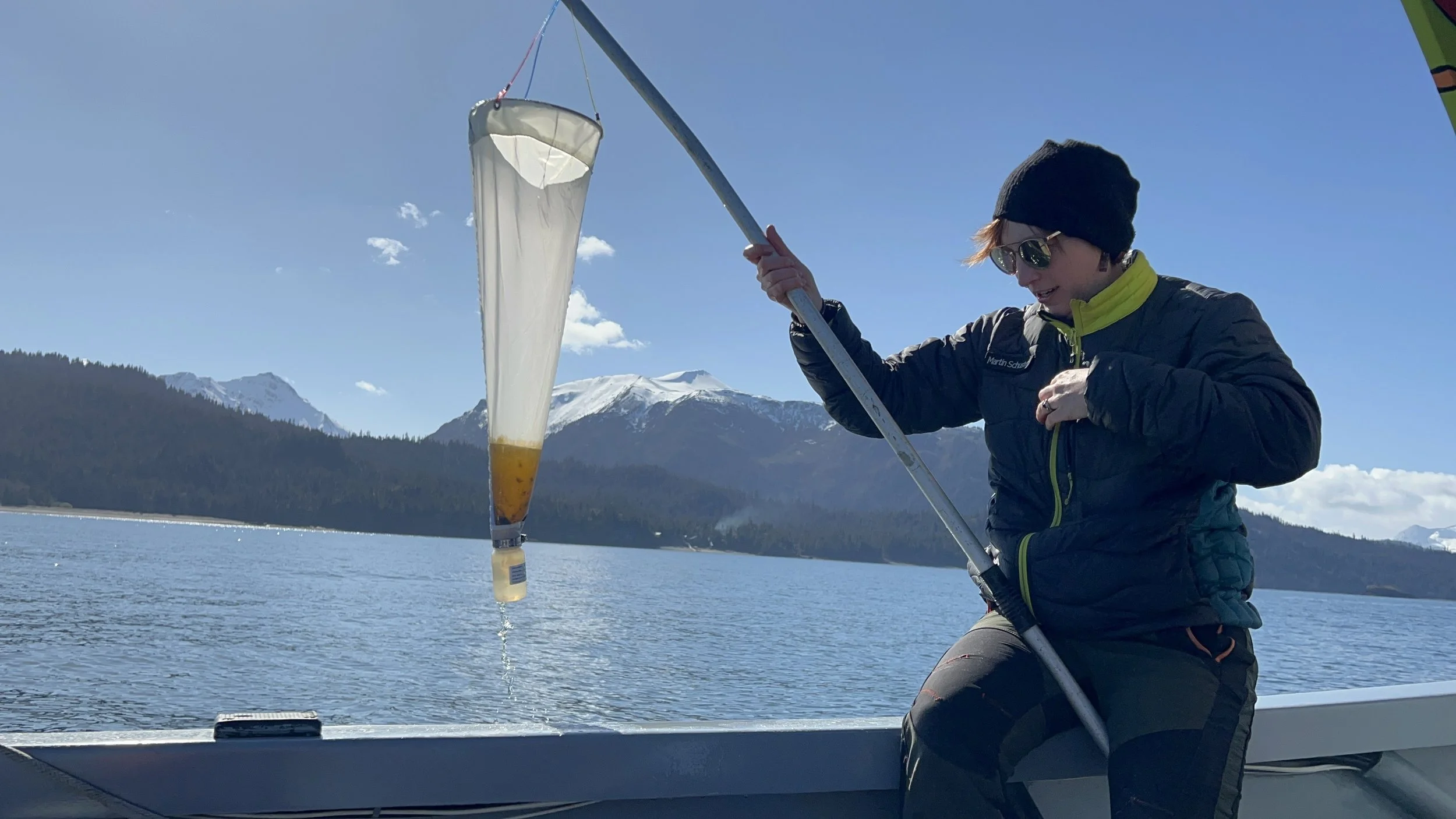
Thomas Farrugia & Rose Masui, Alaska Harmful Algal Bloom Network
KEYNOTE: Uncertain Waters – Uniting expertise to respond to harmful algal blooms in southcentral Alaska
About The Presentation:
During the summer of 2025, Kachemak Bay experienced seabird mortalities, marine mammal strandings, and an abundance of harmful algal bloom (HAB)-forming phytoplankton. These phytoplankton species can produce toxins that present a threat to both wildlife and human health. Regional and statewide collaborations have been enhanced over the past decade to help mitigate these HAB threats, with statewide coordination through the Alaska HAB Network. In Kachemak Bay, a monitoring and communication response was rapidly developed by a collaborative group of state and federal agencies, tribal partners, academic institutions, oyster farmers and non-profit organizations. This talk will explore the good, the bad and the uncertainty of a HAB event response, and how a community of responders was shaped as the response unfolded.About Thomas:
Thomas is a marine ecologist who joined the Alaska Ocean Observing System in 2020 as the first Alaska Harmful Algal Bloom (AHAB) Network Coordinator. After a B.S. in Biology at McGill University, he spent a year as a fisheries observer in the Bering Sea where he developed an affinity for Alaska and its waters. He obtained his M.S. in Marine Biology at California State University Long Beach, before returning to Alaska for his Ph.D. in Fisheries at the University of Alaska Fairbanks. He then worked as a stock assessment scientist for the Falkland Islands in the south Atlantic, and as a white shark researcher for the Monterey Bay Aquarium. Thomas is very excited to be back in Alaska coordinating the awareness, monitoring, research, and response to HABs – a crucial issue impacting public health, food safety and security, and wildlife populations.
About Rose:
Rosie Masui is the Alaska Harmful Algal Bloom Network’s Outreach and Engagement Lead and works at the Kachemak Bay National Estuarine Research Reserve in Homer, Alaska supporting the Coastal Training and Engagement Program. Rosie has worked to support community monitors in South Central Alaska for 10 years with a focus on marine phytoplankton and harmful algal blooms. She worked with collaborators across the state to support the establishment of the Alaska Harmful Algal Bloom Network. Prior to working at the Reserve, she worked on various projects across the state of Alaska studying arctic fish migrations, interpreting marine mammal imagery, and assisting in salmon run monitoring. Rosie has a B.S. in Fisheries Biology from the University of Vermont and a M.S. in Project Management from the University of Alaska Anchorage. She grew up in Homer and lives there with her son, daughter and husband. Her passion is to improve science communication between researchers and communities in Alaska. -
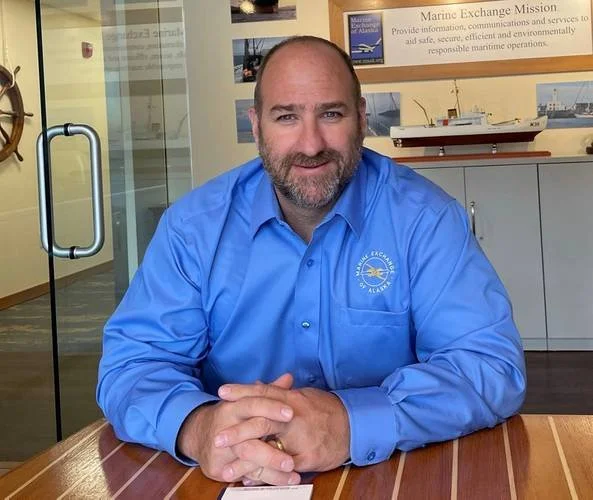
Captain Steve White, USCG (Ret), Executive Director, Marine Exchange of Alaska
KEYNOTE: Marine Exchange of Alaska – saving lives, property, and protecting the environment by preventing maritime disastersAbout The Presentation:
Founded in 2001, Marine Exchange of Alaska (MXAK) is a non-profit organization devoted to saving lives, property, and protecting the environment by preventing maritime disasters. MXAK has developed a vast maritime safety network that provides maritime domain awareness using cutting-edge technology, extensive experience, and strong partnerships. MXAK is responsible for installing and maintaining over 60 weather stations, as well as developing Alaska’s most comprehensive vessel tracking system with over 150 Automatic Identification System (AIS) receivers positioned across the state. Data gathered from marine safety sites is made available on PacTracs, a customizable display system designed to provide mariners with accurate information needed to make informed decisions. Additionally, live AIS data is monitored in the 24/7 Vessel Tracking Monitoring Center where Maritime Information Specialists utilize custom parameters to identify anomalies that may indicate a vessel in distress/of concern. Timely communication with vessel owners/operators, OSROs, and the U.S. Coast Guard increases situational awareness and precise vessel locations are provided to assist with rescue missions. The Marine Exchange of Alaska works with other Marine Exchanges along the West Coast to provide Sea Traffic management to improve efficiency, protect the environment, ensure safe transits and reduce the impact to wildlife.
About Steve:
Captain Steve White joined the Marine Exchange as the Executive Director in September of 2021 after serving 31 years in the Coast Guard. Steve served in a variety of assignments throughout the world with the Coast Guard and Navy. He has patrolled in the Persian Gulf, Gulf of Alaska, Bering Sea, and the Arctic, Pacific, and Atlantic Oceans. Alaska is his passion where he served 7 tours including 4 ship assignments, 2 of which as the Commanding Officer. His final tour was as the Sector Commander and Captain of the Port for Southeast Alaska. Now at the non-profit Marine Exchange of Alaska, he enjoys leading a team that builds and maintains Marine Safety Sites throughout Alaska. These sites gather a variety of data and provide wide ranging services from real-time weather to critical communications. The Marine Exchange of Alaska’s NAIS infrastructure accounts for about 1/3 of the entire system utilized by the United States. In addition, The Marine Exchange operates a 24-hour World-Class Maritime Operations Center that conducts Sea Traffic Management across the Pacific Ocean, from the Panama Canal, to Eastern Asia up and down, the West Coast of North American and into the Northern most latitudes of the US/Canadian Arctic.